

Medicare
GLOBE Model: What It Means for Medicare Part B Drug Costs

Written by Callie Navrides Founder & Licensed Broker
NPN 208836038 min read

Some people with Original Medicare may pay less for certain Part B drugs starting April 1, 2027, under a new payment model called GLOBE. Whether you benefit depends on your coverage, CMS's selection of beneficiaries, the drug you receive, and the date of treatment. The announcement does not mean every Medicare prescription will cost less.
The Centers for Medicare & Medicaid Services (CMS) announced the final GLOBE Model on September 30, 2026. GLOBE stands for Global Benchmark for Efficient Drug Pricing. It tests a different way to calculate drug-manufacturer rebates using international prices, with lower drug coinsurance for eligible beneficiaries when the model's adjustment applies.
What GLOBE changes
Medicare already requires manufacturers of certain Part B drugs to pay rebates when their prices rise faster than inflation. GLOBE tests an alternative calculation that uses drug prices in economically comparable countries as a benchmark. Participation is mandatory for manufacturers of qualifying drugs. A benchmark is a reference amount used in the calculation. It is not a promise that every patient will pay a foreign country's pharmacy price.
The CMS model overview explains two related effects:
- Manufacturers pay applicable rebates to Medicare's trust fund.
- Eligible patients can have lower coinsurance, the share of an approved charge they are responsible for paying.
The manufacturer rebate goes to Medicare, rather than arriving as a check to you. When GLOBE lowers a patient's drug coinsurance, Medicare's payment share increases so the provider's allowed amount is maintained, subject to the deductible and other claim adjustments. CMS explains the payment mechanics in its GLOBE FAQs.
Who may qualify for lower coinsurance?
You must have Original Medicare as your primary payer, meaning Medicare pays first. Medicare Advantage beneficiaries are not included in the group eligible for GLOBE coinsurance. Certain Medicare cost and prepayment plans are also excluded, as are people whose group health coverage, such as employer insurance, pays first. The final rule's beneficiary provisions establish these exclusions.
CMS will select geographic areas representing approximately 25% of Original Medicare Part B beneficiaries, then identify the included people using its address records and eligibility rules. That percentage describes the population selected, not a 25% discount.
You do not apply for GLOBE. According to CMS's eligibility FAQs, the agency determines eligibility when a GLOBE drug claim is processed.
CMS says its GLOBE Model ZIP Codes List will be available by January 16, 2027. You and your provider can use it to anticipate possible eligibility, but a listed ZIP Code alone is not an individual approval. Once CMS identifies you as eligible, moving does not by itself end your inclusion as long as Original Medicare remains your primary payer. People newly joining Original Medicare in selected ZIP Codes may also qualify; CMS makes that determination.
Which drugs are included?
GLOBE applies to selected drugs that Medicare pays for separately under Part B. These are often medicines administered in a clinical setting, such as some cancer therapies or drugs used to treat autoimmune conditions and arthritis. Your diagnosis alone does not establish that your particular drug qualifies.
The final rule includes drug exclusions, including designated rare-disease drugs whose only approved uses are for the designated rare diseases, plasma-derived products, and products on the FDA's approved cell and gene therapy list. CMS also says biosimilars and their reference biologics are excluded once a biosimilar enters the US market.
The practical check is the quarterly GLOBE Model Drug HCPCS Code List. HCPCS codes are billing codes that identify drugs and services. CMS says it will publish the list on the model webpage before each quarter and update it as drugs enter or leave the model.
Keep Part B and Part D separate. Medicare.gov explains that Part B covers a limited set of outpatient drugs under specific conditions, while Part D covers many other prescriptions through drug plans. GLOBE does not replace your Part D coverage or determine all your pharmacy costs. Ask the billing office which part of Medicare covers your medication; an injection, pill, or treatment location alone does not answer that question.
When lower coinsurance can begin
The final rule's timeline separates the model launch from the patient coinsurance period:
- January 1, 2027: The model starts with an initial reporting period for manufacturers' voluntary international pricing submissions.
- April 1, 2027: The five-year performance period begins. Lower coinsurance can start for eligible people receiving qualifying drugs when the adjustment applies.
- March 31, 2032: The performance period and scheduled GLOBE coinsurance window end.
- March 31, 2034: The rebate-payment and reconciliation period is scheduled to end, or later if payment activities remain unfinished. This administrative period does not extend the patient coinsurance window.
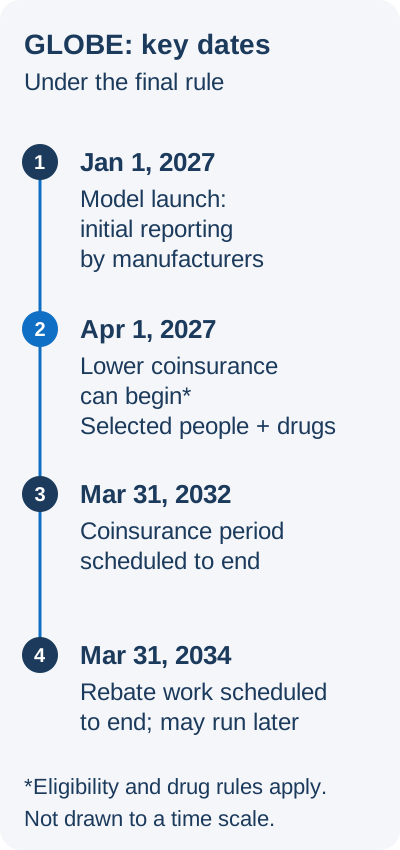
The January launch starts manufacturer reporting. Lower coinsurance can begin in April for eligible people and drugs. The later rebate-processing period does not extend the patient coinsurance window. Source: CMS's GLOBE final rule, § 513.1(c).
How much could you save?
There is no single GLOBE discount for everyone. CMS says the effect depends on the drug, the rebate calculation, and your circumstances, including supplemental insurance. The model's design also keeps eligible drug coinsurance from exceeding what it would have been without GLOBE. That protection concerns the drug's coinsurance, not a promise that every part of your medical bill falls. See CMS's cost explanation.
For context, Medicare.gov says that in most cases you pay up to 20% of the approved amount for Part B drugs after meeting the deductible. Some drugs already have lower coinsurance under inflation-rebate rules, with drugs and reductions changing quarterly.
A hypothetical example: CMS illustrates a $100 drug allowed amount with coinsurance falling from 20% to 10%. Assume the deductible is met, no other claim adjustments apply, and you pay the coinsurance yourself:
- At 20%, your share is $20 and Medicare's share is $80.
- At the hypothetical 10% rate, your share is $10 and Medicare's share is $90.
- Your drug coinsurance falls by $10, while the combined allowed amount stays $100.
This illustrates the mechanics; it is not a quoted drug price or a promised 10% rate. CMS uses this example in its provider-payment FAQ.
If a Medigap policy helps pay your coinsurance, a smaller coinsurance amount may not translate into the same reduction in money you personally spend. Ask how your specific supplemental benefits apply. CMS also says model savings could reduce Part B premiums more broadly; that is a possible effect, not a guaranteed individual premium cut.
Should the announcement change your coverage decision?
GLOBE eligibility alone is not enough to decide which Medicare coverage fits you. Compare your doctors, prescriptions, premiums, and total expected costs before making a change.
If you are considering leaving Medicare Advantage for Original Medicare with a Supplement, confirm your Medigap purchase rights first. Medicare.gov explains that protections depend on your enrollment circumstances and that states may offer additional rights. Outside protected situations, a policy may be harder to obtain or cost more. Medicare's comparison of Original Medicare and Medicare Advantage explains the broader tradeoffs.
What to check with your provider
Use these questions when the model's lists and payment instructions become available:
- Coverage: Is this drug billed under Part B, and does Original Medicare pay first for me?
- Selection: Does CMS identify me as included in GLOBE? Use the ZIP Code list as an initial check, not a guarantee.
- Drug and date: Is the drug's billing code on the GLOBE list for the quarter in which I receive treatment, within the coinsurance period?
- Your share: What coinsurance applies after Medicare processes the claim, and how do my deductible and supplemental insurance affect what I owe? Ask for the drug charge separately from other treatment charges.
- Any overpayment: If I paid coinsurance before Medicare processed the claim, does that payment match the final amount I owe?
That last question matters: CMS says a provider may need to issue a partial refund if it collected excess coinsurance before payment. Keep your receipt and compare it with the processed claim and provider statement.
CMS plans to monitor access, drug supply, and prescribing changes. If you have difficulty obtaining a drug and believe the problem may be related to GLOBE, its FAQs direct you to 1-800-MEDICARE (1-800-633-4227).
For a broader coverage comparison, bring your medication list, treating providers, and current coverage details to a NavaQuote Medicare review. For model eligibility and drug-specific billing, start with CMS's current lists and your treating provider's billing office.
Source note: This guide reflects CMS information available September 30, 2026, including the final rule released for public inspection. Federal Register publication is scheduled for October 2, 2026.